A little house in Burgundy

The Legend of Little Eagle, a novel with a strong aviation/WW2 background, is a story that the reader discovers through the investigation of a narrator, Hélène Marchal. She wants to know who was a young USAAF  fighter pilot who got killed near her (fictitious) village of Verdeil, in Burgundy, on a summer day of 1944. He had sacrificed his life to save the lives of civilians. The book begins with  a prologue describing a mission over Germany and intended to illustrate what it meant to be an aviator in air combat. Here enters Hélène:


Chapter 1: The House

I am in my grandparents’ house. Before they lived here, it was home to several generations of ancestors on my father’s side. And this long family history almost came to an end one day in August, 1944.

I’m sitting in this little north-facing room, gazing out beyond the September garden. The weather is still mild, and the swifts have gathered on the electric wires by the hundreds, soon to depart on their long southward migration. For a few more days, as if waiting for a mysterious signal to take flight on favorable winds, these birds with their torpedo-like bodies and long scythe-shaped wings will practice for the journey, gathering in huge formations where they move as one, changing direction with stupefying speed.

Before long I will see their flocks leave for good, bound for equatorial Africa, following a trajectory that seems to be written in their genes, since even the birds born that year, who leave after their parents, get there in a matter of days. This type of migration, along a precise but mysterious route traced by the position of the stars and the Earth’s magnetic field, is nothing short of miraculous, in my opinion.


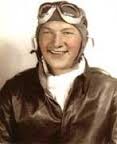
Through my window I can just see the row of poplars along the edge of the cemetery, and although I only arrived recently in this village in Burgundy, I’ve already been there several times to lay flowers on a tomb. Not the tomb of a family member—I did not know them, in any event—but that of a young man, John Philip Garreau. This American pilot from the Eighth Air Force died as he crashed into a field not three hundred feet from here, on board his plane that had been hit by German flak not long before. He could have saved his life when he saw the village coming inexorably closer. He still had time to jump with his parachute. But it was noon, there were people in the streets, children on their way home from school. He had to hold on, had to try at all cost to crash-land his plane a bit further along to avoid the carnage. At the risk of his own life.

I only heard this tragic story recently, when I came to see the house I had inherited. It was unfamiliar to me, and while exploring the premises, I stopped in a little room upstairs—where I am writing now —which I had immediately singled out as a possible study and reading room, no doubt because it had a beautiful old oak bookcase. The bookcase was almost empty, but there was a row of books on one half of one of the upper shelves; most of the books were old, some with leather bindings; it was as if they had been forgotten there. There was an edition of the Fables of La Fontaine, illustrated with engravings; there were bound volumes of an agricultural journal, and books about hunting game birds, decorated with reproductions of watercolors; there were Jules Verne novels in the hardbound Hetzel edition, and some classics: Maupassant, Balzac, Hugo, and Alexandre Dumas.

I was perched on the edge of a chair, tilting my head to read the titles, when suddenly my gaze was caught by a piece of pale yellow paper sticking out of a volume of Shakespeare’s complete works. It was a carbon copy of a letter from my grandfather, Paul Lenglin, Post Box 152, Beaune, folded in four and inserted into a passage of The Tempest. Intrigued, I opened it to have a look. It had been typed on an old-fashioned typewriter, and the imprint of the letters had lost some of its clarity. I went to sit by the window to decrypt the missive.

Dear Mr. & Mrs. Garreau,

This is a letter to express my deep gratitude for the action of your son, First Lieutenant John Philip Garreau, on August 12 1944. It took much time and many letters and inquiries to US and Allied military authorities to find your address and this is the reason I write only today. You know of course that your beloved son was killed in action in this part of France during the War when his P-51 Mustang named Lucky Lady crashed. In the name of all the members of my family I present you today my very sincere sympathy for the tragic loss of John Philip.But perhaps you do not know that First Lieutenant Garreau ACTED LIKE A HERO and saved our lives. He could have parachuted and saved himself when he realized that his plane was out of control, but he did not. On the contrary, he remained in his plane with a burning engine to avoid falling on our village, and more precisely right on our family house. My wife and my two young children were inside.

 From the front yard, I watched him myself taking a desperate turn very close from the roof in order not to kill us all. The result of this action was that he was killed in a field just behind our house. Myself and my family, and all the inhabitants of the village of Verdeil, see and will always see John Philip Garreau like a real hero. He was a great ace in air combat but he did not hesitate to sacrifice himself to save other, civilian lives. You can be proud of him and we also are. We will never forget him. Your son’s body now lies here in our peaceful cemetery, not far from our house. We visit him regularly and lay flowers on his grave. If you come to France one day, please contact us. It would be a great honor for us to meet the parents of such a brave and courageous young man.

The letter was dated June 14, 1947, and had been addressed to “the parents” of First Lieutenant John Philip Garreau, in Browning, Montana, USA.

I must have gone pale. I remember I made an effort to catch my breath. My heart was beating faster. With my gaze lost in the branches of the trees around the house I struggled, not to understand, but to accept the meaning of this letter which Paul Lenglin had probably asked someone to translate into this somewhat approximate English. And very quickly I had to face facts: were it not for John Philip Garreau’s sacrifice, my grandparents, their son, and their daughter— who was my mother, a little girl at the time—would have perished on that August day in 1944. And… and I would never have been born. I would never have existed.

I knew right away that this discovery would obsess me in a thousand different ways. Once I had absorbed the shock, I visualized the tragic event. I imagined, I saw this pilot in his doomed airplane, his cockpit filling with black smoke, and then suddenly he saw the house a few dozen yards ahead of him. The ultimate obstacle in his line of flight above the village; he did not want to crash here, he had understood in a flash what would happen upon impact, and it seemed inevitable: the P-51 Mustang was still full of fuel and ammunition, a veritable flying bomb. It would crash into the façade of the house, causing the roof to explode, the walls to collapse, and flames to burst from the windows. An infernal roar. Victims, civilians, would be sacrificed.

But John Philip Garreau had made his decision several seconds earlier. He would stay on board, whatever the cost, and do whatever he could to avoid the catastrophe. Did he think he might still make it, with a forced landing? Witnesses later confirmed to me that he had suddenly managed to give his spluttering engine enough throttle to swerve to the right at the last minute: the tip of the left wing clipped the chimney, and he crashed just beyond the house. I reread the letter and paused for a long time on the sentence, “my wife and my two young children were inside.”

During the days and weeks that followed my discovery, while I was arranging the house to make it more comfortable, I came up with an idea which quickly turned into a plan. A mission, even, something it was my duty to remember, as people say nowadays. I needed to know exactly who John Philip Garreau was, I wanted to know about his life, his trajectory as a man and as a pilot. A man? A very young man, almost an adolescent, still. He was hardly a day over eighteen. This detail was devastating. Not only because the boy I was already referring to as Johnny had made it possible for me to be born, but also because I had seen with my own eyes many young men killed in combat. I am a journalist, and for a time I was a war correspondent. I was familiar with the wars that were fought from the 1980s on. Dirty wars, doubtful wars, civilian or ethnic wars: El Salvador, Yugoslavia, Lebanon, Somalia, Rwanda, Afghanistan, the Democratic Republic of Congo. Everywhere young people were fighting other young people without really understanding what was at stake, caught up in conflicts that stemmed from ideologies and the megalomaniacal, greedy or otherwise odious regimes or individuals. And it was the civilians who paid the highest price in the slaughter.

Was it the tomboy in me who had chosen this profession? I was the best at gym in my school; my knees had scabs on them all year round because of my incorrigible propensity to chase my little schoolmates around the schoolyard. And there were the Sundays I spent with my father exploring the forest of Senart. I had left my dolls behind as soon as I could. Papa and I made a little hot air balloon. I loved nailing bits of wood together. As an adolescent, I had an idol, a model: Martha Gellhorn, who for a time was Mrs. Ernest Hemingway, a correspondent for the American magazine Collier’s, present on every battlefield on the planet for over half a century, from Spain in 1937 to the American invasion of Panama—she was 81 years old!—by way of Vietnam and the Six-Day War. In an interview she said, “It’s exciting being in the middle of all the bombs going off.”

The sounds of war, the danger—it excited me too. But nowadays, I feel like saying, Yeah, sure, Martha, but let’s talk about those explosions and their consequences. I had seen so much blood spilled that it disgusted me. I got a bullet in my thigh in Somalia, and shrapnel from a mine pierced my jugular vein near Vukovar. I don’t know who saved my life. I remember that we went some way by car, I was half conscious, and there was someone trying to stop the bleeding by pressing on my neck with a rag. I woke up in a hospital, having miraculously survived the operation. I have worn a silk scarf ever since, no matter the weather, to hide my ugly scar.

I used to believe it was important to bear witness, I used to believe in the ideals that had incited me to choose this career: the freedom of information, a quest for truth, the defense of democracy and justice, the need to inform people’s opinions, and so on. And then, my job as a war correspondent also meant adrenaline, generated by the feeling— only too real—that I was experiencing something exceptional, the impression I belonged to a prestigious little aristocracy within the corporation. And as far as the public was concerned I was in a caste on my own.

Perhaps it was recognition I sought by showing my courage, by taking risks, by impressing my colleagues and the people around me. It was a good period for me as far as advancing my career went, but with hindsight, I can see how insignificant it all was, because now every time a new conflict breaks out somewhere, I get the bitter feeling that all my reporting from those conflict zones served absolutely no purpose. We don’t learn from past experience, whether private or collective, and posterity doesn’t give a damn. The madness of humankind goes on.

I must however acknowledge that there were the “good wars,” the ones that repaired the abominable consequences of earlier conflicts. I might have come into the world just the same, even without John Philip Garreau and an airplane managing not to land on my grandparents’ house. But in what sort of country or society, under what regime, if the thousands of Garreaus and Joneses and Smiths and all the other American G.I.s had not come to risk their lives in Europe and eradicate Nazism? When I think about this, my doubts as to the usefulness of bearing witness dissolve. I have to piece together all the elements of Johnny Garreau’s life: it’s a noble project, full of meaning to me.


Share
Publié dans The Legend of Little Eagle, Tout le blog | Marqué avec | Laisser un commentaire

Le choix entre sauver sa vie et sauver celles des autres

English version


J’ai raconté précédemment comment une lettre, trouvée dans un petit musée du Montana, avait inspiré l’écriture de mon roman « La légende de Little Eagle » . Cette missive, datée de 1947 et envoyée de France, avait pour but de remercier la famille d’un jeune pilote américain, LeRoy Lutz, pour son héroïsme. En juin 1944, il s’était sacrifié pour éviter la mort de civils innocents.

Elle avait été écrite par le secrétaire de la mairie de Mardeuil, en Champagne, mais elle n’est jamais parvenue aux proches de LeRoy Lutz. Ce n’est qu’en 1995 qu’ils ont appris ce qui s’était passé, grâce aux efforts menés durant 50 ans par André Mathy, qui, alors enfant, avait été témoin du drame.

J’ai écrit un roman dont le héros, à part le fait d’être un pilote de l’USA Air Force et de connaître la même fin que lui, n’a rien à voir avec la trajectoire de LeRoy Lutz. Et je me suis rendu compte en le relisant qu’au-delà des pages décrivant la jeunesse de John Philip Garreau, sa formation d’aviateur, ses missions sur l’Allemagne et la France, le thème sous-jacent de cette histoire était le destin. Johnny Garreau est un indien métis, descendant d’un arrière grand-père français venu comme trappeur dans le Montana. Son destin sera de combattre les Allemands, qui occupent le pays de son ancêtre.

Récemment, j’ai reçu un message de Jerry Lutz, un des neveux de LeRoy, qui vit à Lincoln, dans le Nebraska.

© Lutz-Maddock Family - www.fold3.com

© Lutz-Maddock Family – www.fold3.com

Il venait de découvrir mon livre et tenait à me remercier de l’avoir écrit à partir de l’épisode tragique mentionné plus haut. Et il profitait de l’occasion pour me donner des informations que j’ignorais.

Les Lutz, établis depuis plusieurs générations comme agriculteurs en Russie, avaient fui ce pays en 1912 pour s’établir aux Etats-Unis. LeRoy était un des 13 enfants de la famille, qui comptait 6 garçons. Quatre d’entre eux ont servi durant la Deuxième guerre mondiale, et tous sont rentrés sains et sauf à l’exception de LeRoy. Et Jerry Lutz me donne une autre information, relative à la fois à la notion de destin et au phénomène des coïncidences : LeRoy avait eu un fils après sa mort. Comme Johnny Garreau dans mon roman. Une découverte qui d’un coup change  les perspectives de plusieurs des personnages. (Dans un message subséquent, Jerry, qui s’est renseigné entre temps, corrige : le garçon en question, également nommé LeRoy, était né 8 jours avant le drame de Mardeuil, et son père n’a probablement pas eu la joie de l’apprendre avant de mourir.) Mais peu importe : je trouve que cette rencontre entre une fiction et une réalité qui émerge à le lecture de cette fiction est quelque chose de merveilleux.

Autre chose encore. Jerry Lutz m’a indiqué qu’il voulait écrire à André Mathy pour le remercier de la constance de ses efforts en vue de retrouver la famille Lutz et de l’informer de ce qui s’était vraiment passé à Mardeuil. Grâce à cela, LeRoy Lutz a reçu des décorations à titre posthume en 1995. Son héroïsme a donc été officiellement reconnu. Jerry ne parlant pas français, je lui ai traduit sa lettre, ayant moi-même eu un contact téléphonique avec Mathy en 2012. Cette lettre débute comme suit :

Cher Monsieur Mathy,

 Mon nom est Jerry Lutz, et je suis le neveu de LeRoy (Lear) Lutz, le pilote américain qui s’était tué près de votre maison le 22 juin 1944. Je sais que vous avez été témoin de ce crash, et je vous écris afin de vous remercier pour les efforts extraordinaires que vous avez déployés en vue de contacter notre famille, et nous relater l’histoire de cet événement. J’espère que vous me pardonnerez de ne pas vous avoir exprimé ma reconnaissance plus tôt. (…)

Reste la lettre que j’avais découverte au Musée de Ninepipes, dans le Montana. Son contenu, décrivant avec précision le comportement de LeRoy Lutz à bord de son P-38 devenu difficile à piloter après avoir été touché par la flak allemande, s’était gravé dans ma mémoire, mais je ne l’avais pas retrouvée lors d’une nouvelle visite, deux ans plus tard. Elle avait paraît-il été rendue à la fille d’Arnold Helding, un camarade de LeRoy Lutz, qui pilotait l’avion d’Helding, « The Lucky Lady », en ce jour fatal du 22 juin 1944.

Et voilà que Jerry Lutz me dit qu’il s’est renseigné auprès du musée de Ninepipes, qui lui a dit qu’ils avaient une copie de cette lettre. Je lui ai indiqué le nom de Linda Helding, la fille de l’aviateur, qui vit près de Ninepipes, et ils ont pris contact, ils vont se rencontrer au printemps prochain dans le Montana. Ils auront des choses à se dire, ces descendants de la « great generation ». Des histoires à partager au sujet de ces deux pilotes. L’histoire semble désormais bouclée, mais qui sait ? Voilà que Linda vient de me contacter, et elle a partagé cet article (en anglais) sur ma page Facebook ! Incroyable.

Tout ceci me ramène à William Kittredge, un auteur du Montana que je cite à plusieurs reprises (et à dessein) dans « La Légende de Little Eagle ». « Les histoires », dit-il – et peu importe d’où elles viennent, qu’elles soient vraies ou inventées – acquièrent de la valeur lorsqu’elle captivent votre sensibilité, touchent votre coeur, et aiguisent votre curiosité. (…) Une histoire est quelque chose qui relie, qui éclaire. Elle peut aussi, parfois, être une source de guérison. »

En découvrant cette lettre dans le Montana, j’avais eu d’emblée l’envie d’écrire un livre sur ce pilote, mais ce n’est que dix ans plus tard que j’ai eu l’idée qui a pu enclencher sa rédaction. J’ignorais alors que ce livre allait quelques années plus tard provoquer autant de surprises, toutes émouvantes.

La lettre de Jerry Lutz à André Mathy se termine ainsi :

Un ami sage m’a dit un jour que lorsqu’on est confronté à un choix difficile, l’option la plus radicale est souvent la bonne. Et il est certain que le choix entre sauver sa propre vie ou les vies d’autres personnes en est l’exemple ultime. Je suis admiratif devant le courage dont mon oncle a fait preuve voici 71 ans alors qu’il devait prendre cette décision.

 Beaucoup de pilotes n’avaient souvent pas à prendre de décision.

Ils étaient tués. Par le feu de l’ennemi. Dans des accidents. En grand nombres.

En témoigne le chapitre « Into the Fight » dans cet article sur lequel je suis tombé par hasard voici trois jours, et que j’ai transmis à Jerry Lutz.

La tombe de LeRoy Lutz au cimetière de Wyuka, Lincoln, Nebraska. (The Maddox-Lutz family/ www.fold3.com)

La tombe de LeRoy Lutz au cimetière de Wyuka, Lincoln, Nebraska. (The Maddox-Lutz family/ www.fold3.com)

Ce sont des extraits d’un livre sur le 479th Fighter Group auquel LeRoy appartenait. Jerry a immédiatement acheté cet ouvrage et reconnu son oncle sur une aile du « Lucky Lady », dans une photo de groupe. En le lisant, il comprendra mieux encore ce par quoi LeRoy était passé en tant que pilote de chasse. Un parcours d’enfer comparable à celui suivi par bien d’autres, mais finalement différent par sa décision, pleine d’altruisme et d’esprit de sacrifice.

Dans la fiction née de cette histoire, Hélène Marchal, ma narratrice, doit la vie à mon héros, qui connaît une fin comparable.

Le Lightning P-38 sur lequel LeRoy Lutz volait était un engin puissant, lourdement armé, doté d’un double fuselage. C’était un des avions les plus rapides de l’époque, et il était principalement engagé dans les missions d’interception en vol, dans les vols de reconnaissance photographique, et dans les attaques au sol. Les Allemands le redoutaient et l’avaient baptisé « le diable à deux queues ». J’ai lu quelque part qu’une petite douzaine d’entre eux étaient encore en état de vol à travers le monde de nos jours. Dont celui-ci, superbement restauré. 


Share
Publié dans Aviation et pilotes, La légende de Little Eagle, Tout le blog | Marqué avec , , , , , , , , , , , , , , | Laisser un commentaire

The choice between saving one’s own life or the lives of others

French version


I have written earlier how a letter, found in a small museum in Montana, had inspired the writing of my novel « The Legend of Little Eagle ». This letter, dated 1947 and sent from France, was intended to thank the family of a young US pilot, LeRoy Lutz, for his heroism. In June 1944, he had sacrificed his life to avoid the death of innocent civilians.

This letter, written by the secretary of the Mardeuil municipal council, in the Champagne region, never reached the Lutz family. It was only in 1995 that they learned what had happend to LeRoy, thanks to the efforts – over 50 years – of André Mathy, who as a child had been an eyewitness of the accident.

I have written a novel whose hero, apart from being a pilot who encountered the same fate as him, has nothing to do with LeRoy’s Lutz history. Rereading it, I realized that beyond the pages describing the youth of John Philip Garreau, his training as an aviator, his missions above Germany and France, the underlying theme of this story is : destiny. Johnny Garreau is a mixed blood Indian, the great great son of a French immigrant who had settled as a trapper in 19th century Montana. His destiny will be to fight the Germans, who occupy the country of his ancestor.

Recently, I got a message from Jerry Lutz, a nephew of LeRoy who lives in Lincoln, Nebraska. He had just discovered my book and wanted to thank me for writing it from the tragic episode mentioned above. And he took advantage of the occasion to offer me new information about his uncle. Lutz - copie

The Lutzes, of German origin, had been established for several generations as farmers in Russia. They had fled the chaotic conditions of this country in 1912 to settle down in the United States. They had 13 children, including 6 boys. Four of them served in WWII, and all returned unscathed but LeRoy, whose own destiny, as a German American, was to fight the Germans in Europe, like Johnny Garreau. And Jerry Lutz gave me another bit of information which to me has to do with destiny and coincidences : LeRoy, he said, had had a son after his death. Like Johnny Garreau in my novel, something which suddenly changes the life perpectives of several of the novel’s characters. (In a following message, Jerry, who had meanwhile checked about that, corrected : the boy in question, also named LeRoy, was actually born 8 days before the events in Mardeuil, but LeRoy had probably not had the joy to learn of this before dying. But this doesn’t matter. I find that fiction and reality meeting this way is something wonderful for a writer.

Another thing : Jerry Lutz told me that he wanted to write to André Mathy to thank him for the constancy of his efforts over the years, trying to get in touch with the American family. Thanks to Mathy, LeRoy Lutz was posthumously awarded the Distinguished Flying Cross and Purple Heart in 1995, his heroic act being officially recognized. As I had had a phone conversation with Mathy in 2012, and as Jerry does not speak French, I have translated his letter, which begins:

Dear Mr. Mathy,

 My name is Jerry Lutz, and I am the nephew of LeRoy (Lear) Lutz, who was the US pilot killed near your home on June 22, 1944. I know that you witnessed the crash, and I am writing to thank you for the extraordinary efforts to which you went in order to contact our family, and relate to us the story of my uncle’s crash. I hope that you will forgive me for not writing to thank you sooner.

Out of common interest, Jerry and I have shared a lot of valuable information over just a few days. Including some developments about the 1947 letter from France I had found in the Ninepipes Museum of Montana. Its content, describing accurately LeRoy Lutz’s behaviour and actions at the controls of his P-38 which had been hit by the German flak, got engraved in my memory, but it was no more on display in the museum when I returned there two years later. It had been returned to the daughter of Arnold Helding, another pilot in LeRoy’s fighter group, who had a plane named « Lucky Lady ». Ironically, it was LeRoy who flew this aircraft on that fatal day of June 22, 1944, hence a deep confusion, apparently, about who was at the controls.

And now Jerry tells me he has e-mailed the Ninepipes museum, and that they told him they had a copy of this letter. I gave him the name of Linda Helding, who lives near Ninepipes, and he plans to contact her for a meeting on a trip next spring to Montana. They will have things, stories to share. All seems to come full circle. As I’m polishing a bit this post today, I see on my Facebook page that Linda Helding  has shared it. Wonderful !

All this brings me back to William Kittredge, a Montana author whom I quote on several instances in « The Legend of Little Eagle ». Stories, he said – no matter where they come from, wether they are true or fictional – acquire their value when they captivate your sensibility, touch your heart, and sharpen your curiosity. (…) A story is something which connects, which enlightens. It can also, sometimes, be a source of healing.

When I discovered this letter in Montana, I immediatly felt like writing a novel. The beginning of a story was there. But it was only ten years later that I had the idea which triggered its writing. And I never thought then that so many moving surprises and connections would come out of this book more than one year after its publication in English. The letter of Jerry Lutz to André Mathy ends like this :

 A wise friend once told me that, when faced with a difficult choice, the hardest option is usually the correct one. Certainly, the choice between saving one’s own life or the lives of others is the ultimate example of that. I marvel at the courage displayed by my uncle 71 years ago when faced with that decision. Thank you so much for preserving and sharing his story!

 In many instances, fighter pilots did not have to make a decision: it was too late. They were killed. By the enemy’s fire, by friendly fire, or in accidents. In great numbers.

LeRoy Lear’s grave marker at Wyuka cemetery in Lincoln. (Source: fold 3)

There is testimony of that in the chapter « Into the Fight » of that link I ran into the other day and that I forwarded to Jerry Lutz. These are extracts of a book on the 479th Fighter Group, LeRoy’s unit. Jerry, who was unaware of its existence, immediatly bought the book and recognized LeRoy on top of a wing of the « Lucky Lady » in a group photo. Reading it, he will understand even better what his uncle went through as a fighter pilot. A path through hell comparable to that of many others, but finally different by his decision, full of altruism and spirit of sacrifice.

My narrator, Hélène Marchal, owes him her life.


The Lightning P-38 that LeRoy Lutz used to fly was a beautiful, fast, heavily armed, powerful beast. It was one of the fastest aircrafts of the time and was mostly engaged in planes interception, photography flights, and strifing targets on the ground. The Germans  had nicknamed it « the fork-tailed devil ». I’ve read somewhere that only a dozen of them where still in flying conditions today. Including this one, beautifully restored.


Share
Publié dans Aviation et pilotes, The Legend of Little Eagle, Tout le blog | Marqué avec , , , , , , , , , , , | Laisser un commentaire